Quick answer
If you were hurt by a box truck in Michigan, the driver, the business the driver worked for and sometimes the truck's owner may be responsible. You can usually claim no-fault benefits first, then pursue the at-fault parties for pain and suffering and other losses. Because many box truck drivers do not need a commercial driver's license, training and supervision are often key issues.
- Common vehicles
- Delivery, moving and work trucks
- Who may pay
- Driver, employer, owner
- Deadline to sue
- Generally 3 years
About box truck accident cases
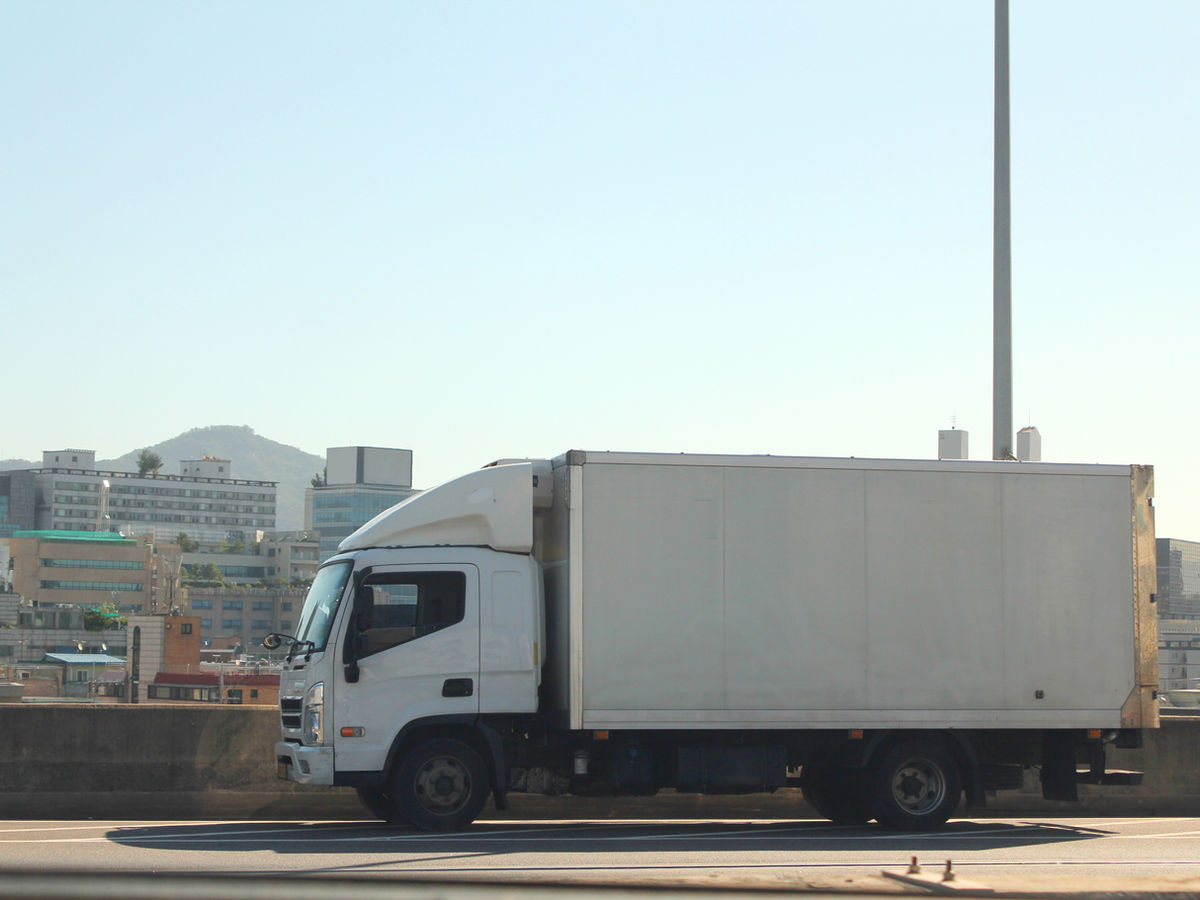
Box trucks, also called straight trucks or cube vans, carry furniture, appliances, packages and tools through Jackson neighborhoods and business districts every day. They have large blind spots and long stopping distances.
Many are driven by people with limited training, on tight schedules, in rented or company vehicles with layers of ownership and insurance. Inosencio & Fisk sorts out who was responsible and which policies apply, so nothing is left on the table.
Common causes of box truck crashes
- Backing up without a spotter or a working camera
- Wide right turns that cut off cars, bikes and pedestrians
- Inexperienced drivers in rented trucks
- Rushing to meet delivery schedules
- Overloaded or unbalanced cargo that affects braking
- Poorly maintained brakes, lights and tires
Who may be responsible
Truck cases often involve more than one responsible party, and each may carry its own insurance. We look at all of them.
Driver
Unsafe backing, turns, speed or distraction.
Employer
A business is usually responsible for an employee driving on the job, and for poor training or supervision.
Truck owner or leasing company
Can matter for insurance coverage and maintenance duties.
Rental company
Responsible only in limited situations, such as failing to maintain the truck.
Loading or moving company
Overloaded or unsecured cargo that contributed to the crash.
Evidence we move to preserve
Trucking companies are only required to keep some records for months, and electronic data can be overwritten. We send preservation letters right away.
- Fleet telematics and GPS data
- Delivery logs, routes and dispatch records
- The rental or lease agreement for the truck
- Driver training and employment records
- Dashcam and nearby business video
- Maintenance and inspection history
What you may be able to recover
Michigan claims usually have two parts.
No-fault (PIP) benefits
Paid by your own or a household auto policy, regardless of fault.
- Medical and rehabilitation expenses, based on your policy's coverage level
- Lost wages for up to three years, subject to statutory limits
- Replacement services such as household help
- Attendant care and mileage to medical appointments
Claim against the at-fault parties
For losses no-fault does not cover.
- Pain and suffering, when the injury meets Michigan's threshold
- Wage loss beyond no-fault's limits
- Medical costs beyond your policy's coverage level
- Future care and lost earning capacity
- Vehicle and property damage
Michigan law at a glance
| Rule | What it means | Source |
|---|---|---|
| No-fault (PIP) claim notice | Written notice to the insurer within 1 year of the crash | MCL 500.3145 |
| Lawsuit against at-fault parties | Generally within 3 years of the crash | MCL 600.5805 |
| Pain and suffering threshold | Serious impairment of body function, permanent serious disfigurement or death | MCL 500.3135 |
| Shared fault | Recovery is reduced by your share of fault; more than 50% bars pain and suffering | MCL 500.3135(2)(b) |
| Truck driver hours | 11 hours driving after 10 off, no driving past the 14th hour on duty, 30-minute break after 8 hours driving | 49 CFR 395.3 |
| Claims against government | Written notice deadlines as short as 120 days for road defects | MCL 691.1404 |
Deadlines have exceptions and some are shorter. Talk to a lawyer before relying on any date.
What to do after a box truck crash
Get medical care and follow up
Some injuries, including brain injuries, show up days later. Medical records link the injury to the crash.
Report the crash
Call police and get the report number. Crashes involving commercial vehicles are often investigated in more detail.
Photograph everything
The vehicles, company names, USDOT numbers, the scene, skid marks and your injuries.
Skip the recorded statement
Do not give a recorded statement to the trucking company's insurer before you talk with a lawyer.
Start your no-fault claim
Notify your auto insurer in writing and keep every bill. The notice deadline is generally one year.
Call a lawyer early
We send preservation letters so driver logs, black box data and video are not overwritten or thrown away.
Box Truck Crashes: common questions
Does a box truck driver need a commercial driver's license?
Many box trucks weigh under the threshold that requires a CDL, so drivers may have less training than semi-truck drivers. Federal safety rules can still apply to commercial vehicles used in interstate business.
Who is responsible when a rented box truck causes a crash?
It depends on how the truck was being used. The driver, the driver's employer and in some cases the rental company may be involved, and several insurance policies may apply.
Why are box trucks dangerous in town?
Box trucks have large blind spots, longer stopping distances and frequent stops for deliveries. Wide turns, backing and sudden stops in neighborhoods and parking lots are common causes of crashes.
What if the box truck driver was making deliveries for a business?
When a driver is working at the time of a crash, the employer can often be held responsible. We look at who owned the truck, who employed the driver and what insurance covers the work.
What evidence helps in a box truck accident case?
Photos, police reports, witness information, delivery records, GPS or telematics data and any dashcam footage. Many box trucks used by businesses have tracking systems that record speed and location.